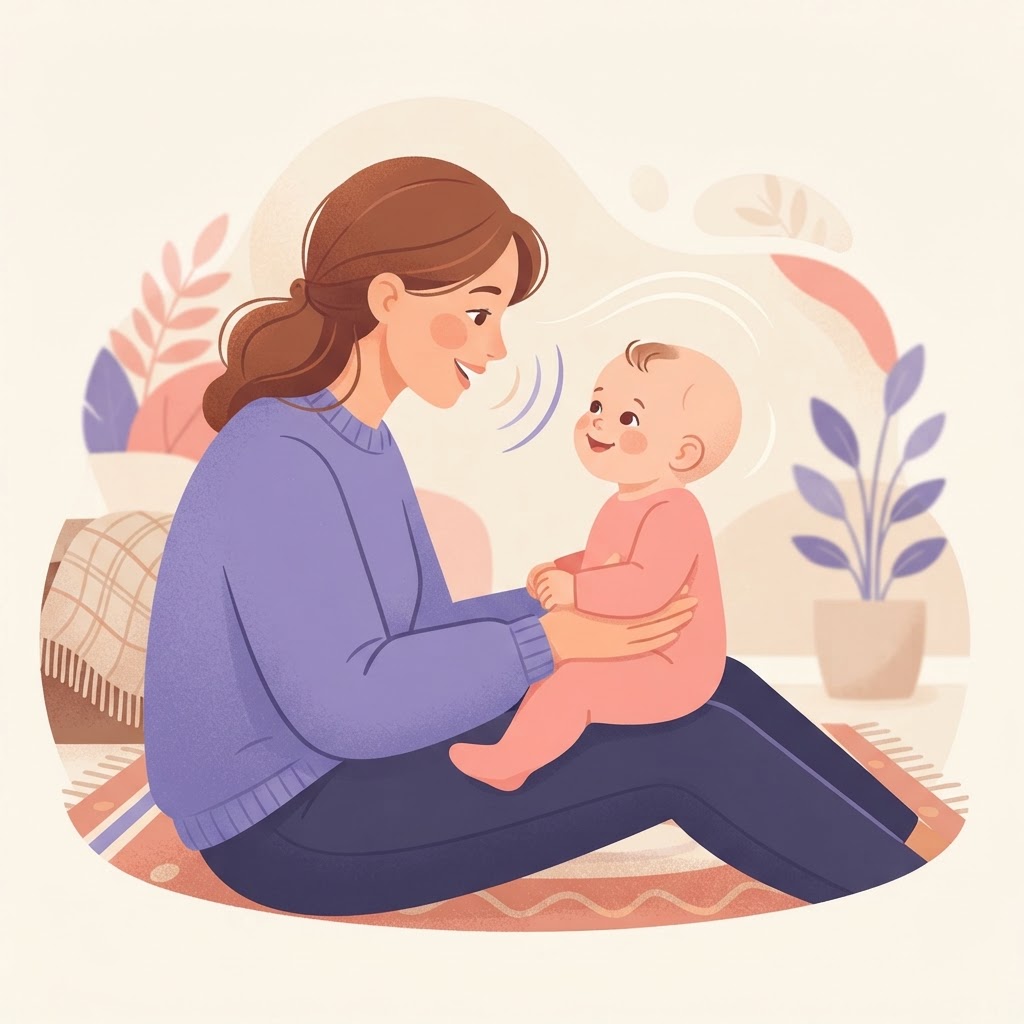
Every parent remembers the first time it happens. You say your baby’s name across the room, and the little head turns. It is a strange and wonderful feeling, somewhere between surprise and pride. But babies do not wake up one morning knowing their names. Recognition builds slowly, in stages, and the timeline is wider than most parents expect.
If you are still choosing a name, or you just said it out loud for the hundredth time and wondered whether any of it is landing, this guide walks through what typically happens, when, and why the sound of a name plays a bigger role than people assume.
When Do Babies First Respond to Their Name?
Most babies begin to show a response to their own name somewhere between four and six months of age. At first the reaction is subtle. A pause in movement. Eyes flicking toward you. A turn of the head when the name comes from an unexpected direction. It rarely looks like the movies, where the baby locks eyes and beams. Early recognition looks more like attention than greeting.
By around six to nine months, the response becomes more consistent. Babies at this age can pick their name out of general chatter, especially when the speaker uses a warm, familiar tone. And by the first birthday, most babies respond reliably to their own name in ordinary situations, although a noisy room or an interesting toy can still win the competition for their attention.
These are ranges, not deadlines. Some babies respond early. Some take a few extra months. Both patterns sit comfortably within normal development, so a single missed reaction means very little on its own.
What Name Recognition Actually Is
Babies do not understand that a name is a name. What they build first is a sound pattern that has been paired with attention, feeding, comfort, and play thousands of times. Their name becomes one of the most familiar sound sequences in their world, and familiar sounds get priority in a busy brain.
That process explains two things parents often notice. First, babies may respond to any name said in the same melodic pattern, especially in the early months. A grandmother calling the baby by a completely different nickname can still get a turn of the head. Second, babies in bilingual homes often respond to both versions of their name, because both sound patterns have been reinforced, even before the child understands that the two words mean the same thing.
Signs Your Baby Is Starting to Recognize Their Name
There is no test you need to run at home, but parents usually spot these moments on their own:
- The baby turns or looks toward the speaker when the name is said in a normal voice, not an excited one.
- The baby pauses an activity, like kicking or mouthing a toy, when hearing the name.
- The baby reacts to the name but ignores other similar words in the same tone.
- The baby shows excitement, like a smile or arm waving, when the name is followed by being picked up or played with.
The last one is worth a note. Name recognition is strongest when the name predicts something good happening. Babies are not learning labels at this age. They are learning that a certain sound usually comes attached to a certain person who does certain lovely things.
Why the Sound of a Name Matters
Because babies learn names as sound patterns, the physical shape of a name affects how quickly it sticks. Short names with clear syllables, like Nadia or Lucía, tend to be easy for babies to isolate from background speech. Longer names often get shortened naturally, and that is completely fine, as long as the people around the baby are roughly consistent.
Distinctiveness helps too. In a household with a Noah and a Noa, both babies may respond to both names for a while. This is harmless and temporary, but it is one reason some parents deliberately avoid sibling names that sound too alike. Our guide to picking sibling names that fit together covers this balance in more detail.
Tone matters as much as the syllables. Babies respond to the emotional music of a voice long before they respond to words. If your name choices have fallen flat with relatives, remember that the baby will mostly hear the name spoken with love, which is the exact condition under which recognition grows fastest.
How to Help Your Baby Learn Their Name
Nothing here requires effort or equipment. Babies learn names through ordinary life. That said, a few habits make the process smoother:
- Use one main form of the name most of the time. Nicknames are normal and wonderful, but in the early months, some consistency helps the pattern form faster.
- Say the name in a normal voice sometimes, not always the sing-song one. Both registers are useful.
- Pair the name with eye contact and interaction. The name attaches most strongly to faces and feelings.
- Let other caregivers use the same core name, or at least the same first syllable.
None of this is strict. Plenty of babies grow up with four nicknames from four relatives and sort it all out perfectly well.
What If There Is No Reaction?
First, check the situation. Is the TV on? Is the baby mid-zoomies in a jumper? Babies filter out sounds while focused, the same way adults miss someone calling them during a good paragraph of a book. Try again when the baby is calm and the room is quiet.
If a baby is not responding to sounds in general, or seems not to startle at loud noises, or is missing other milestones that the pediatrician tracks, mention it at the next checkup. Hearing matters more than any naming decision, and checking it is quick. Most of the time everything is fine, and the name recognition simply arrives a bit later.
Choosing a Name Your Baby Will Love to Hear
If you are on the naming side of this journey rather than the wondering side, the same science points to a gentle principle: pick a name that the important people in your life will say easily and happily. Our baby name directory marks every name with its pronunciation, syllable count, and how easily it reads in English, which covers most of what makes a name easy to learn and lovely to hear.
And if you want a quick way to shortlist names that honor both parents, the name generator builds suggestions from either parent’s name, or from a description of the feeling you are chasing. The framework in how to choose a baby name you both love can then help you narrow the list together.
One day soon, the name you chose will stop a cry, turn a head, or earn a drooly smile. That moment is coming. It just arrives in its own time.
Frequently Asked Questions
Most babies respond to their name fairly consistently around their first birthday. Before that, responses come and go, and that is completely normal. Consistency in a busy, distracting environment is one of the later skills to arrive.
Some babies show early reactions around three to four months, usually a pause or a head turn. It often looks like a response to tone rather than the name itself, because babies tune in to the melody of speech before they track specific words.
There is no need to worry. Bilingual babies often respond to both versions of their name, and they usually figure out that both words refer to them without any confusion. Learning two sound patterns can take slightly longer, but the difference is small and temporary.
In the early months, babies respond to the pattern of attention, especially your voice with its familiar rhythm and pitch. The specific name becomes special a little later, once it has been paired with interaction enough times to stand out from everything else.
Related Guides
Gender-Neutral Baby Names: A Practical Guide for Modern Families
Choosing a baby name is one of the earliest and most meaningful decisions parents make. In recent years,…
Read guide →
How to Choose a Baby Name You Both Love: A Practical Framework
Choosing a name for your baby is one of the very first major parenting decisions you and your…
Read guide →